
A Welcoming Space for Connection and Envisioning the Corridor
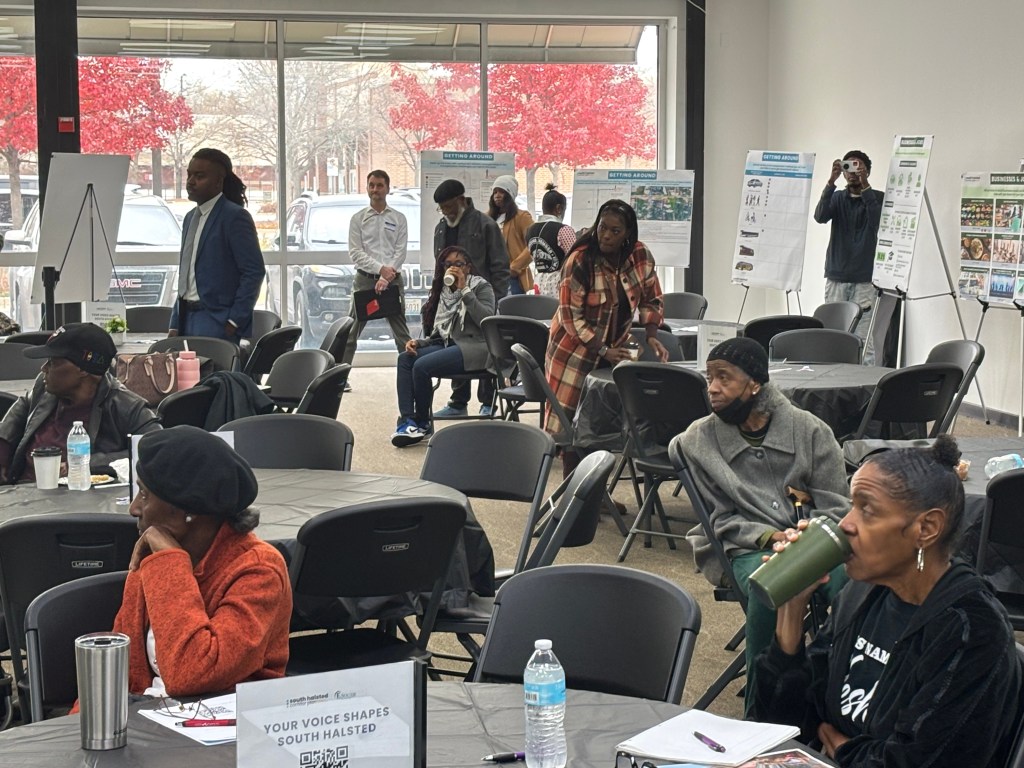
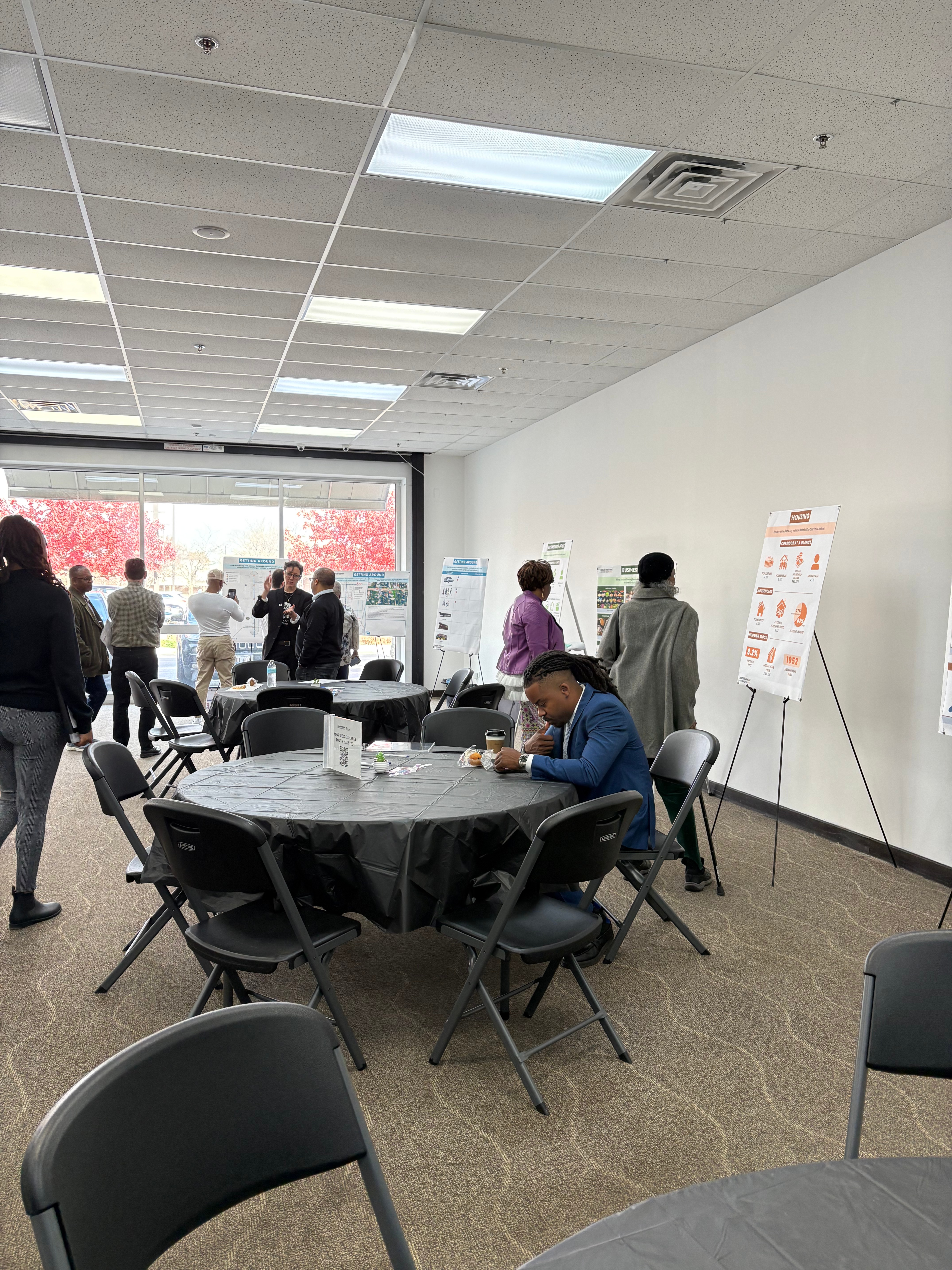
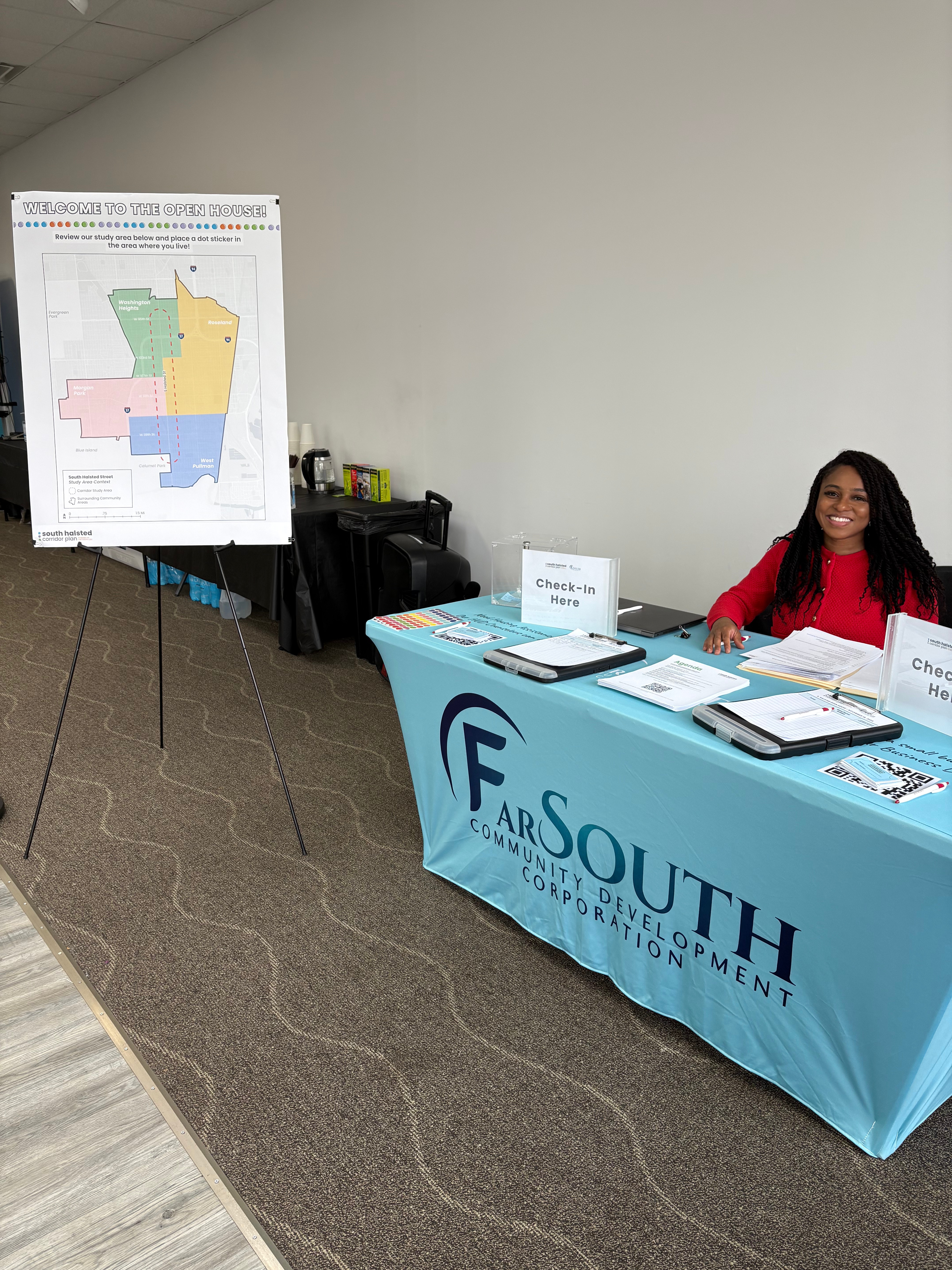
On November 15, 2025, Far South Community Development Corporation (FSCDC) and community partners opened their doors for the South Halsted Community Open House, a gathering built around storytelling, collaboration, and an assessment of what residents want for the future of the corridor. The event began with a warm welcome as music played softly, coffee was poured, and neighbors explored six interactive stations dedicated to housing, mobility, business development, public space, and culture.
From the beginning, the room carried a sense of familiarity, longtime residents greeting one another, small business owners exchanging ideas, elders offering wisdom from decades in the neighborhood. One attendee summed it up perfectly:
“This neighborhood has family ties. That’s the reason so many of us are still here.”
During opening remarks, Abraham Lacy, President of FSCDC, reinforced that the South Halsted Corridor Plan is not simply a technical exercise, it is a shared vision built with and for the people who live and work here. Alderman Mosley echoed this, emphasizing that the ward’s priorities are rooted in community leadership, small business expansion, and restoring Halsted’s identity as a corridor of choice.
Early conversations revealed a mix of pride and obstacles. Several participants described Halsted as a place with deep history but unmet potential. One resident shared that what initially attracted them to the neighborhood was its “resilience” and its “sense of community that you can feel right away.” Another said, “This is still a neighborhood of choice—we just have to build that base back.”
These reflections set the tone for the day: grounded in real experiences, open-eyed about challenges, and optimistic about what is possible when residents lead the conversation.


Panel Insights: Community Ownership, Local Pride & What Progress Should Look Like
The panel discussion brought forward voices from residents, nonprofit partners, and longtime community advocates.
Brandon Lenore, manager of Lior’s Café shared the experience of opening up a new business. He described how they have had to adjust their business, meet local needs, and give back to the community that has strongly supported them. By a raise of hands, almost all of the residents had been to Lior’s. The business is now about equal parts restaurant service, catering and take-out. They have found that flexibility has kept them strong.
Paolo Cisneros, project manager of Preservation of Affordable Housing (POAH) provided background on Morgan Park Commons. POAH will be developing two mixed-use buildings totaling 70 units of affordable housing with ground floor retail and live-work units.
The conversation revealed a candid, forward-looking dialogue that is centered on investment, identity, and building back the corridor in a way that strengthens, not replaces, existing communities.
1. The need for more Black owned businesses
A major theme that came up repeatedly was the strong desire for business growth rooted in local ownership. Many attendees expressed frustration that too many new investments in Chicago’s South Side do not reflect the people who live there.
Several direct quotes highlight this clearly:
- “I would like to see Black-owned businesses—not another nail salon or liquor store.”
- “Attract more Black-owned businesses—not just anything.”
- “We need our own equity in our own corridor.”
One resident described how they once operated a business nearby and how important it felt to “represent the neighborhood” in ownership. Another community member reinforced this by saying, “Don’t be afraid of making that leap—we have talent here.”

2. Halsted Should Be a Gathering Place Again
Many people spoke emotionally about the loss of casual places to sit, gather, or enjoy a meal. One resident said simply: “Where are the places to sit down and eat?”
Another added:
“We need more full-service restaurants. Something that reflects us.”
Several participants reflected on how other neighborhoods have spaces where families linger, where youth hang out safely, and where seniors can relax. They expressed a desire for the same at South Halsted:
“Make our community attractive so people want to stay.”
3. Building for the Next Generation
A powerful theme concerned the future of young people in the corridor.
- “Think about the next generation.”
- “Build a progression plan for our kids.”
Youth-centered investment, whether jobs, public spaces, creative programming, or safer walkable streets, was repeatedly mentioned as a necessary pillar of any long-term plan.

4. Concerns About Stability, Displacement & Gentrification
There were also some concerns expressed by residents:
- “Concerns of gentrification.”
- “Existing homes need to be maintained.”
- “How do we ensure growth without pushing people out?”
Residents emphasized that improvements must strengthen the existing community, not make it harder for long-term residents to stay.
5. Identity & Neighborhood Strength
One participant said something that resonated deeply throughout the room:
“At the root, a healthy community has a strong center.”
That “center,” as people elaborated, includes schools, churches, thriving small businesses, and relationships between residents that have endured generations. Strengthening that center became a recurring call-to-action throughout the panel.
Closing Reflections — “We Just Need a Runway.”
The Open House closed with gratitude, a reminder about upcoming engagement opportunities, and a feeling that residents had genuinely shaped the next steps of the South Halsted Corridor Plan.
One resident said something that perfectly captures the spirit of the day:
“We’ve saved the character of this corridor before– we just need a runway to build it back up again.”
Across conversations, notes, and reflections, the message was unmistakable:
South Halsted is ready for thoughtful, community-rooted investment, led by the people who call it home.
Next Steps
Input will continue to be collected through the project’s website, www.southhalsedcorridorplan.org
Based on the full range of both in-person and virtual input, a draft plan will be developed and shared for public comment in late Winter / early Spring 2026.
 South Halsted Corridor Plan
Leave a comment